Water vole or rat? How to read the signs on a riverbank
Look at the face and the tail. A water vole has a blunt nose, small ears and a short furry tail. A brown rat has a pointed nose, large ears and a long scaly tail.
By the editorsPublished Sources checked 8 November 2026
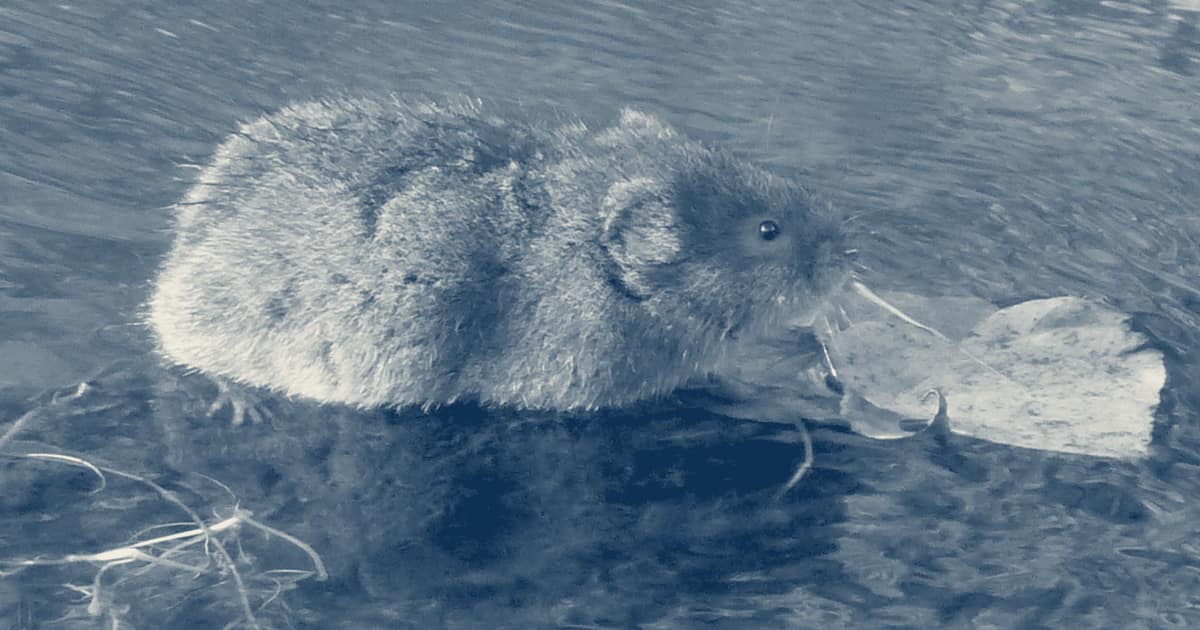

Most sightings can be settled by looking at the head and tail. A water vole has chestnut-brown fur, a blunt rounded nose and small ears, with a furry tail about half the length of its body. A brown rat is larger, greyer and pointier, with big visible ears and a long scaly tail about as long as its body. You are far more likely to meet a rat. Water voles are listed as endangered on the Red Lists for both Great Britain and England.
| Feature | Water vole | Brown rat |
|---|---|---|
| Face | Blunt and rounded | Pointed |
| Ears | Small, hidden by fur | Large and visible |
| Tail | Furry, about half body length | Long and scaly, about body length |
| Fur | Chestnut brown; often darker in Scotland, sometimes black | Grey-brown |
| Size | Body 14 to 22cm, tail 9.5 to 14cm | Larger overall |
Compiled from The Wildlife Trusts and the Canal and River Trust.
Where and when to look for water voles
The Canal and River Trust suggests April to September, when bankside plants are shorter. Water voles are active by day, feeding in the open, so you do not need to stay out at dusk. Look for slow, shallow water with stable levels and soft earth banks. They live along rivers, streams and ditches, and also around ponds, marshes and reedbeds.
Listen as well as look. Ripples close to the bank can mean a vole just below the surface, and many people first notice one by the loud plop as it enters the water. Stand well back. They are often on the far bank, so binoculars are worth carrying.
Keep your geography in mind. The Wildlife Trusts say that water voles are absent from Northern Ireland, the Scottish islands, the Isle of Man, the Channel Islands and the Isles of Scilly. A rat-like swimmer in those places is not a water vole.
Signs you can find when the vole has gone
You will probably find signs before you ever see the animal. Three are worth learning:
- Burrows. Holes in the bank, often with a nibbled grass "lawn" around the entrance. Some entrances lie just under the water, out of the way of predators.
- Feeding stations. Neat piles of chewed stems at the water's edge, with the ends cut at about 45 degrees. Voles stay close to home, so a pile suggests a burrow nearby.
- Latrines. Collections of droppings used to mark territory during the breeding season. The Wildlife Trusts describe them as cigar-shaped, and the Canal and River Trust as small, green-brown and roughly the size of a baked bean.
Footprints and droppings are easy to confuse with those of other small mammals, so treat one sign on its own as a suggestion. A burrow, a lawn and a pile of angled stems in the same place make a far stronger case.
Otters: look for what they leave behind
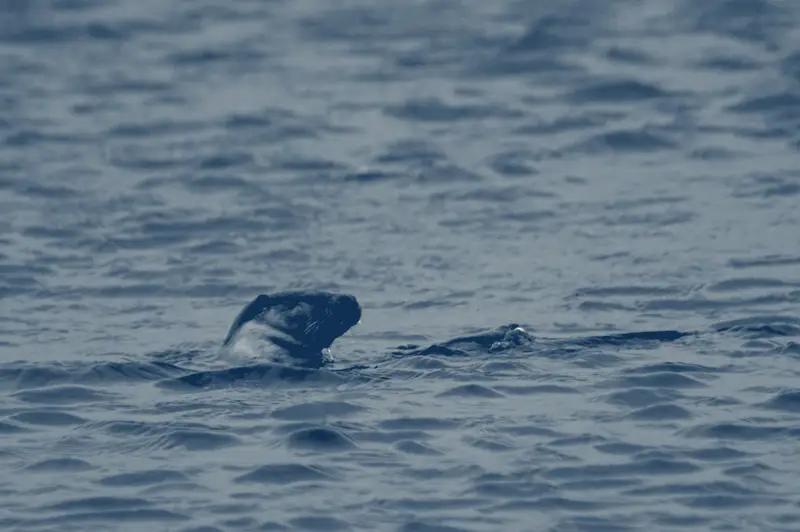

Otters are much bigger than people expect: 60 to 80cm of body with a 32 to 56cm tail, and a weight of 6 to 8kg. They have grey-brown fur, a broad snout and a pale chest and throat. The Wildlife Trusts describe them as rare but widespread across the UK, though absent from parts of central and southern England. They need clean rivers with plenty of food and vegetation for cover.
The classic sign is spraint, the otter's droppings, left in conspicuous spots such as fallen trees, weirs and bridges, where they work as scented messages to other otters. Spraint has visible fish bones in it and a surprisingly pleasant smell that is often compared to jasmine tea. Footprints are five-toed and about 6 to 7cm long.
Check a likely bridge footing or a big rock in midstream. If you find a dropping full of fish bones that smells of tea rather than of rot, you have probably found spraint. Mink are smaller, with a narrower face, and the Trusts say an otter is much the larger of the two.
What the law says
Both animals have legal protection, and that protection reaches their homes. Natural England's advice for planners in England sets it out. Under the Wildlife and Countryside Act 1981 it is an offence to intentionally kill, injure or take a water vole, or to intentionally or recklessly damage or destroy a place it uses for shelter, disturb it there, or block access to it.
Otters are European protected species under the Conservation of Habitats and Species Regulations 2017. It is an offence to deliberately kill, injure, disturb or capture them, or to damage or destroy their breeding sites and resting places, including when no otter is present at the time. Those pages apply to England. For the other nations, ask NatureScot, Natural Resources Wales or the Northern Ireland Environment Agency, as the detail is theirs to explain.
In practice, that gives riverside walkers and anglers some simple rules: keep to the path, keep dogs away from burrows and holts, and do not poke at a bank to find out what is in it. Riverbank work is the bigger risk. Soft earth banks and thick vegetation are just what water voles need, and Natural England tells planners to ask for a survey where the habitat is suitable. If you manage a stretch of bank, take advice before altering it.
Sharing what you see
Natural England points planners to the National Biodiversity Network Atlas for records, and adds that the absence of a record does not mean an animal is absent. It could just mean nobody has submitted data for that spot, which is a good reason to pass your sighting to a local wildlife trust or recording group.
A few things on this site connect with what you find. Otters depend on clean water and plenty of fish, so how river health is measured is relevant. A plague-carrying crayfish and a riverside plant feature in our invasive species guide. Should you find dead fish rather than droppings, the numbers are in our guide to reporting river pollution.